

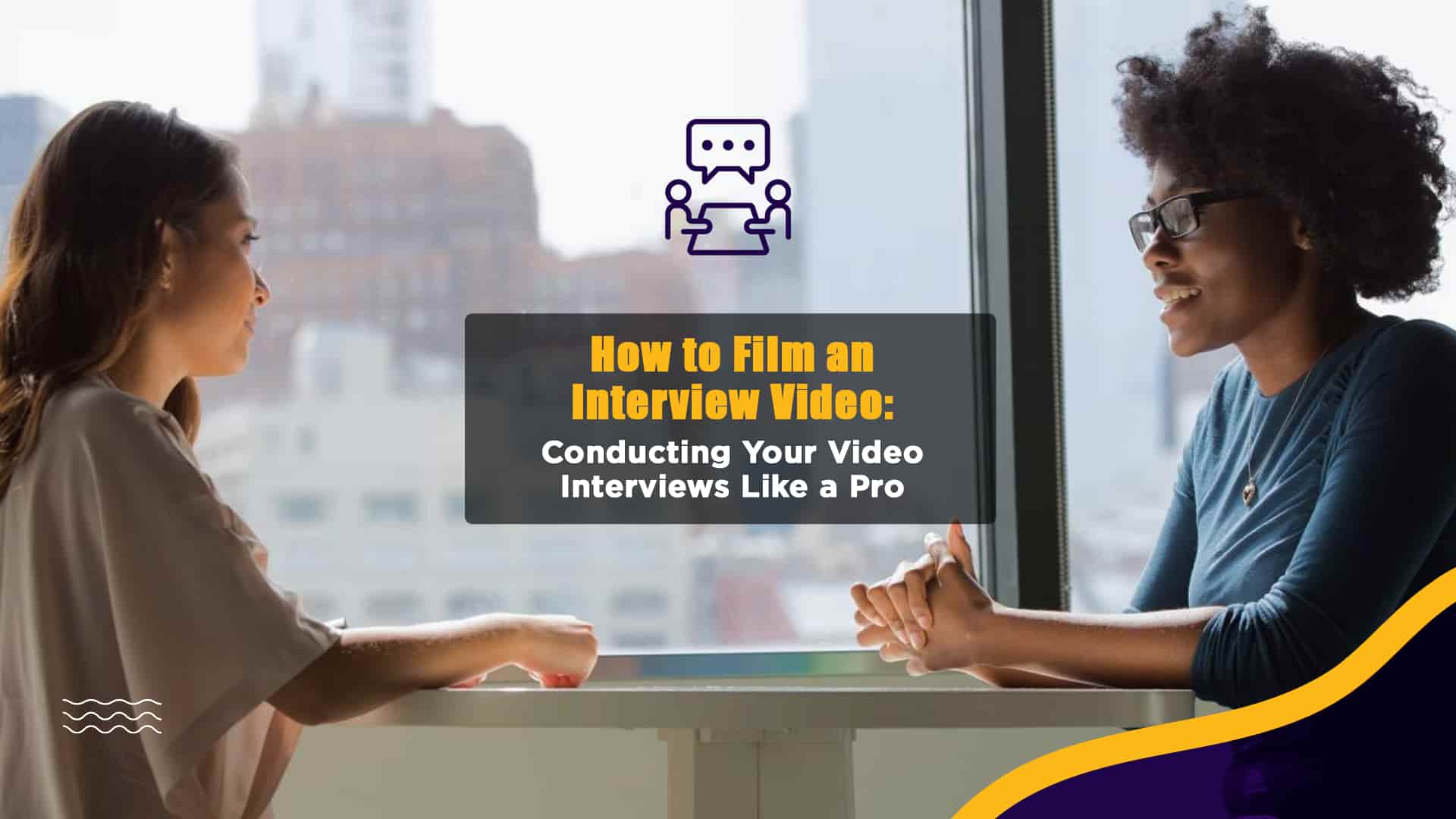
Struggling to Conduct a Great Interview?
A high-quality interview video depends not only on technical setup but also on how you engage with your interviewee.
A great interviewer knows how to lead the conversation, make the interviewee feel comfortable, and guide the discussion naturally.
Whether you’re creating testimonial videos, recruitment videos, or a good old-fashioned brand promo video, how you conduct the interview will shape the final product. In this guide, we’ll focus on best practices for setting up and guiding the interview, helping your subject shine, and ensuring a smooth, engaging conversation.
For more insights into the pre-production interview video process and how to prepare your list of questions, see our previous article.
If you’re ready to learn all about how to film a video interview, keep reading!
Interview Setup: Positioning for Success
A well-planned interview setup ensures a high-quality video and a professional look and feel. Here’s how to position the interviewer and interviewee strategically to create the best frame and camera angle:
- Know how to set the scene – Choose a quiet, well-lit recording environment to minimize distractions and improve recording quality.
- Positioning matters – The interviewer should stand or sit slightly off-camera to allow the interviewee to maintain a natural gaze. Ensure the lens of the primary camera is at the same height as the interviewer to avoid the interviewee looking above or below the lens.
- Camera setup – Whether using a one or two-camera interview setup, ensure the camera captures a flattering angle of the interviewee. As stated previously, try to place your primary camera at eye level with the interviewer and interviewee.
- Frame the shot correctly – A medium close-up is often the best way to add intimacy to the scene. If using a second camera, feel free to experiment with the camera height and framing. At the very least, to avoid awkward cuts when editing, you want the second camera’s frame to be noticeably different from the primary camera.
- Mic choice – Using a high-quality mic, such as a lavalier microphone or shotgun microphone, ensures clear audio.
- Lighting setup – Use a key light to light your subject and a fill light to eliminate harsh shadows and enhance the look and feel of the video.
Study the background – Maintain a clean background and avoid clutter that could distract from the interview. Consider including props in the background that speak to the brand or intended vibe of the video. - Post-production planning – Consider how the interview will come together to make the final video engaging and visually appealing. For example, maybe having a clean background (vs. props in the background) makes sense to balance out videos with a lot of complex B-Roll shots.
A good interview setup plays a crucial role in successfully shooting an interview video. Whether you’re recording with a mobile device or filming the interview with a professional camera, a well-thought-out setup will always enhance the final result.
Tips And Tricks for Kicking Off The Interview
A well-prepared interviewer sets the tone for an engaging interview. Taking the time to ease into the interview and create a welcoming atmosphere helps the interviewee feel at ease.
- Know your subject – Research your interviewee so you can ask meaningful and relevant interview questions.
- Ease into the interview – Start with a casual conversation to help the interviewee relax before diving into key topics.
- Coach them on delivery – Encourage them to speak slowly and clearly while maintaining natural body language.
Best Practices for Conducting a Professional Interview
Your interviewee’s comfort and confidence directly impact the success of the interview. Here are some ways to ensure they perform at their best:
- Ask them to introduce themselves – You may be interviewing several people at once, so it’s important to ask the interviewee to state their full name and title at the start of the interview. You’ll thank yourself when it’s time to edit the interview.
- Make the interviewee feel at ease – Build rapport by showing genuine interest and listening attentively.
- Lead the interview – Your job isn’t just to ask questions but to guide the conversation smoothly while keeping the flow of the interview natural and engaging. Make sure to keep the discussion focused and redirect if the interviewee goes off-topic.
- Pause and listen – Give the interviewee time to think and respond without interruption. Remember to nod, react naturally, and follow up on interesting points.
- Encourage complete answers – Have the interviewee repeat the question in their response to provide context for the audience.
- Keep eye contact – This helps build trust and keeps the interviewee engaged.
- Adjust to the interviewee’s energy – If the interviewee is nervous, keep your tone reassuring; if they are animated, match their enthusiasm.
- Be mindful of pacing – Ensure the conversation flows smoothly without feeling rushed or dragged out.
- Address any concerns – If the interviewee stumbles or needs a redo, reassure them that mistakes can be edited out.
- Don’t feel constrained by your list of questions – Sometimes, a response can take you down a new path you weren’t expecting. Don’t be afraid to stray from your list of questions or throw it out completely.

How to Film An Interview Quickly
Short on time? When your interview duration is limited (say, 20 minutes or less), a well-structured approach is crucial to capturing the best moments efficiently. Here are some tips:
- Set expectations – Let the interviewee know in advance that the interview will be brief and to keep responses concise and focused.
- Prioritize key questions – Select only the most essential interview questions to maximize impact.
- Keep transitions smooth – Maintain the flow of the interview by minimizing unnecessary pauses or digressions.
- Use a structured approach – A short interview benefits from a clear introduction, a main discussion, and a concise wrap-up.
- Capture a strong closing – Conclude with a final statement or key takeaway to leave a lasting impression.
What Happens After Recording an Interview Video: Wrapping Up and Next Steps
Once the interview is finished, it’s important to ensure the interviewee feels good about their performance and the experience. Here’s what to do after conducting the interview:
- Thank the interviewee – Show appreciation for their time and insights.
- Discuss next steps – Let them know when the video may be finished and how they can view it.
- Review key takeaways – Briefly summarize the highlights of the discussion for the video editor or other relevant stakeholders.
Key Takeaway
By creating a comfortable environment, leading the conversation effectively, and adapting to your interviewee’s energy, you can set the stage for a professional and natural discussion. Whether you have a full hour or just 20 minutes, focusing on key questions, maintaining good pacing, and keeping the interviewee at ease will help capture the best moments efficiently.
Video Interview Examples
A well-conducted interview can serve multiple purposes across different types of video content. Some common interview uses include:
Promotional Videos – These videos are designed to generate interest, attract support, or create awareness around a specific initiative, product, or service. They often blend storytelling with strategic messaging to leave a lasting impression on the viewer. For example, to attract funding and support for the Science and Technology Center for Fast Virus Detection, Surveillance, and Response (VIDARE), Pixelab Studios produced a story-driven promotional video for Penn State University. The video includes interviews with stakeholders to showcase VIDARE’s capabilities, collaboration, and potential impact on public health:
Testimonial Videos – Featuring real customers or clients, these videos build trust and credibility by sharing authentic experiences with your product or service. For Motive, we interviewed employees from 1-800-GOT-JUNK? to capture firsthand insights on how Motive’s technology has helped improve fleet safety and efficiency. These testimonial videos serve as powerful tools for converting leads into customers by showcasing real-world success stories:
Recruitment Videos – Designed to attract talent, recruitment videos showcase an organization’s mission and work environment. For example, we partnered with Community Care Connections to produce a recruitment video that highlights its empowering work with individuals with disabilities. The video features interviews with caregivers and footage of staff interacting with participants, emphasizing the meaningful impact of their work and the importance of compassionate employees:
Conclusion: Conducting an Interview Like a Pro
By following these guidelines, you’ll know how to create an engaging, high-quality interview that feels natural and authentic! Want the inside scoop on how to prepare your interview questions and coordinate with interviewees? Check out our previous article!



Leave a Comment