

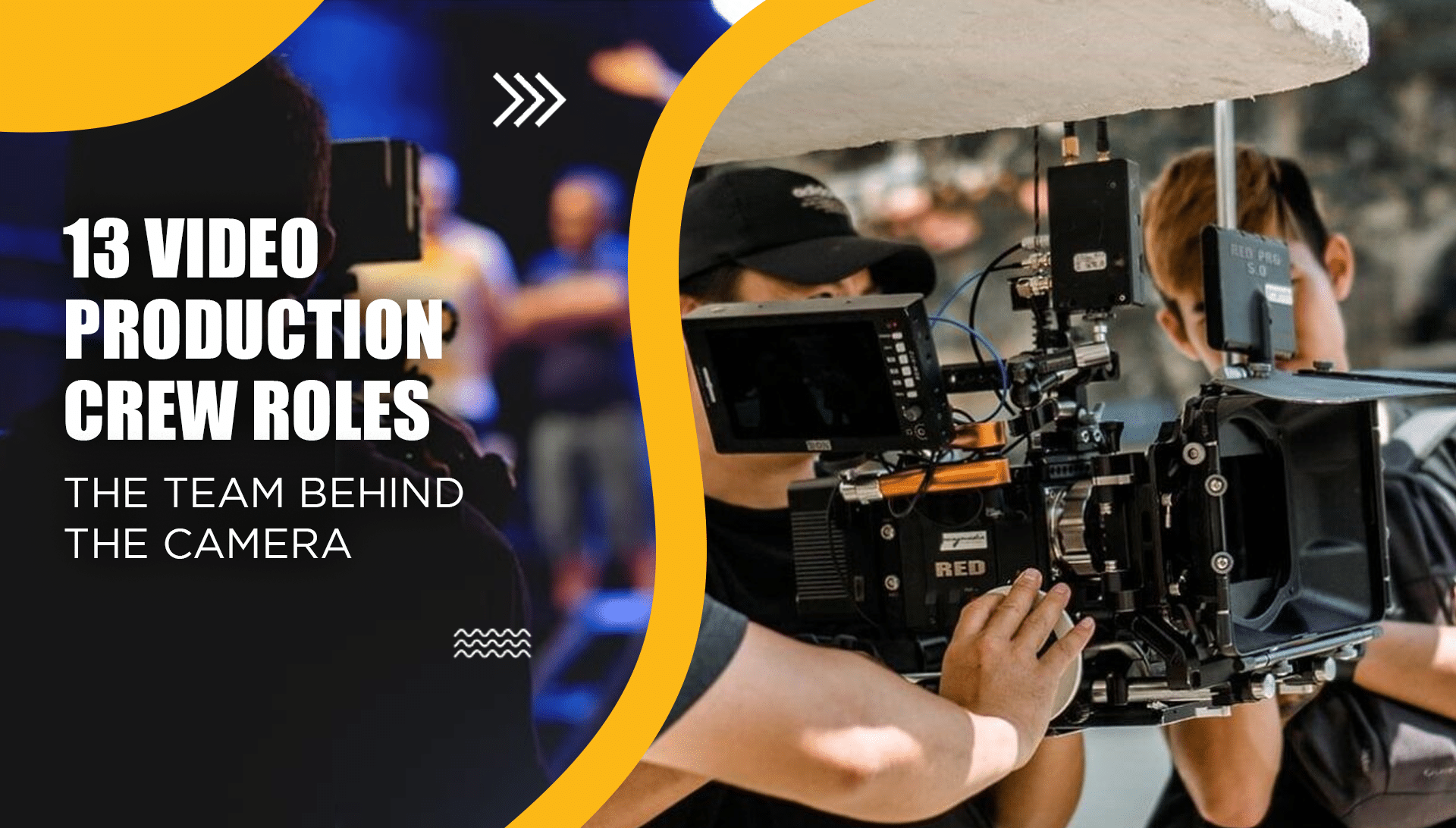
Behind every captivating video lies a powerhouse team orchestrating the magic that brings stories to life.
From blockbuster films to corporate commercials, high-quality video production hinges on a well-coordinated video production team. But who are the people behind the lens, and what are their roles and responsibilities in bringing a video project to life?
Understanding the essential video production crew roles is an important step in mastering the process of creating impactful and professional content.
Today, we’re breaking down the essential roles within a video production crew and exploring the crucial tasks they perform.
The Backbone of Every Production: The Video Production Team
Every successful video production begins with a production team equipped to manage the creative and technical aspects of a project. Depending on the size and type of production, the team’s composition may vary, but the key roles remain consistent. These team members form the foundation of the production process, ensuring that every shoot runs smoothly.
Major Roles in Most Video Production Crews
Let’s break down the roles within a video production project and highlight the key responsibilities of each production team member! These roles are typically standard for productions of any size:
1. Director
The director is responsible for the creative vision of the project. They work closely with the director of photography (DP), the client, and other crew members to translate the script into visually compelling scenes. By working closely with the director, other team members align their efforts to deliver a cohesive final product.
2. Producer
The producer is responsible for overseeing the entire production, from budgeting to hiring the video production crew.
The producer is not only responsible for managing the budget and timeline and hiring the video production crew but also for approving the storyboard, creative brief, and, in some cases, the script. By ensuring that these foundational elements align with the client’s vision, the producer sets the tone for a seamless production process.
3. Project/Production Manager
The production manager is responsible for ensuring the smooth execution of the project from start to finish. They act as the organizational backbone, handling schedules, budgets, logistical challenges, and communications with the client.
This role often involves overseeing all stages of production and coordinating the efforts of the entire video team. The production manager must work with the director and producer to align creative goals with practical execution, ensuring that all roles on a video production team are filled appropriately.
When a production manager is absent, their duties may fall to the producer or director, who then take on additional responsibilities for maintaining timelines and deliverables. This role is critical in both large-scale and small-scale productions, where adaptability and multitasking are key to creating a video efficiently.
4. Camera Operator
This key role on set demands technical expertise as their responsibility is operating the cameras during the video shoot. The camera operator works under the guidance of the director of photography, producer, and director to ensure each shot is executed flawlessly. On smaller shoots, the DP may also act as the camera operator.
5. Video Editor
Once the filming is complete, the footage moves into post-production, where the video editor assembles the shots into a cohesive story. This role requires a keen eye for detail to bring the director’s vision to life.
Key Takeaway
Most video productions include a director, who guides the creative vision; a producer, who is responsible for managing logistics and creative elements; a project or production manager, who handles day-to-day coordination; a camera operator, who captures the footage; and a video editor, who assembles the final product. These essential roles ensure a smooth and efficient production process.

Major Roles in Larger-Scale Video Production Crews
Larger scale video productions typically require (and have budget for) additional crew members, including:
6. Director of Photography (Cinematographer)
The director of photography, or cinematographer, is tasked with capturing the visual essence of the film. They oversee the camera operator and sometimes a team of lighting technicians to craft the perfect shot, often working closely with the director to ensure the visuals align with the director’s vision.
On smaller-scale productions, hiring a dedicated director of photography might not be feasible. In such cases, the director and camera operator may share responsibilities to cover this specific role. For projects with smaller budgets, a streamlined crew often fills the variety of roles needed for producing video content, ensuring the video space is set up effectively. By embracing these cross-functional job titles, the technical crew ensures the roles that make a production successful are fulfilled.
7. Lighting Technician and Gaffer
Lighting technicians, led by the gaffer, manage the placement and intensity of lights to set the mood for each scene. Their work ensures that the video production captures the intended atmosphere.
On smaller-scale productions where a lighting technician or gaffer isn’t present, the director or camera operator may oversee aspects of video lighting. These roles are often fluid in smaller teams, with crew members taking on multiple tasks to ensure all roles are filled during the shoot.
8. Key Grip
The key grip handles the rigging and support equipment for lighting and cameras. Their job is to ensure all gear is safely and effectively set up for the video shoot.
A notable extension of this role is the swing grip, who is versatile and capable of stepping into various roles as needed. On different productions, a swing grip might assist with lighting setups, rigging adjustments, or even support the camera operator. This adaptability makes them invaluable in ensuring all production needs are met on tight schedules and smaller teams.
Without any dedicated grips on the team, smaller productions rely on the technical crew or even the director to take over these tasks. This collaborative effort ensures the production needs are met without compromising safety or quality.
While there may be some overlap between the responsibilities of grips and gaffers, grips are responsible for setting up and maintaining the physical rigging and support systems for lighting and cameras, ensuring the technical infrastructure is secure and functional. In contrast, gaffers are responsible for designing and managing the lighting setup on set, working closely with the DP to achieve the desired visual style.
9. Assistant Camera (AC)
The assistant camera (AC) plays a vital role in supporting the camera operator and director of photography (DP) to ensure smooth and efficient shooting. They are responsible for maintaining and setting up camera equipment, adjusting focus, managing lenses, and ensuring all technical elements related to the camera are functioning properly. The AC helps keep the production on schedule by organizing gear, marking focus points, and troubleshooting any camera-related issues that arise on set.
10. Sound Engineer
The sound engineer is responsible for capturing high-quality audio during production, ensuring clear dialogue and balanced sound levels. They monitor and adjust recording equipment to minimize background noise, distortion, and other sound issues that could affect the final product. The Sound Engineer plays a crucial role in creating a polished and professional film or video, making sure that the audio quality matches the high standards of the visual elements.
11. Production Assistants (PAs)
Often considered the unsung heroes, production assistants support the entire crew by running errands, transporting equipment, and performing any additional tasks needed to keep the production process on track.
Without production assistants, other crew members often share these duties. From transporting equipment to running errands, these essential tasks are redistributed among the team to maintain a smooth workflow. On smaller sets, this teamwork is crucial to maintain efficiency on set, ensuring a successful production.
12. Wardrobe and Prop Stylists
The wardrobe stylist and prop stylist are integral to creating a visually cohesive and authentic look for a production. The wardrobe stylist selects costumes that align with the director or client’s vision and the overall tone of the project, while the prop stylist ensures every object in front of the camera enhances the story.
On smaller productions, the other crew members may absorb these roles on a video production set. This streamlining means that one individual often manages multiple roles to be filled, balancing the detailed work of creating a video with broader production needs.
13. Makeup Artist and Hair Stylist
The makeup artist and hair stylist are responsible for ensuring that actors look their best on screen. From simple touch-ups to elaborate designs, they are the key to presenting characters that resonate with audiences.
Key Takeaway
Large-scale video productions expand the team to include a director of photography (DP) to oversee cinematography, lighting technicians and gaffers to create a visual atmosphere, grips for rigging and equipment support, production assistants for logistical help, and specialists such as wardrobe stylists, prop managers, and makeup and hair artists to prepare talent for their roles in front of the camera.

The Production Workflow: How the Team Works Together
Pre-Production: Laying the Groundwork
During this stage, the production coordinator manages logistics alongside the director and producer while they finalize the script and shot lists. Meanwhile, the director of photography and assistant camera prep the camera equipment.
Production: Lights, Camera, Action!
This is where the lighting technicians, camera operators, and cinematographers shine. The director guides the team to capture the footage while the gaffer and grips ensure technical elements are in place. The producer oversees the entire process, ensuring the shoot stays on schedule and within budget. Production assistants (PAs) support the crew by transporting equipment and assisting with general tasks. Additionally, wardrobe stylists, prop stylists, and makeup artists prepare talent and set pieces to ensure everything is camera-ready.
Post-Production: Assembling the Final Video
In post-production, the video editor assembles the footage into a cohesive narrative while color grading, sound design, and special effects (which may be executed by other specialized video editing team members) bring the project to life. The director and producer play a key role in reviewing drafts, providing feedback, and making final approvals to ensure the project meets the creative brief. Meanwhile, the project manager oversees the workflow, ensuring that tasks are completed on time and the production stays on track to meet delivery deadlines.
Why Every Role Matters
A successful production is a symphony of different roles working together. Each production team member plays a vital part in creating a compelling final product. Without their expertise, the world of video production would lack the stunning visuals and storytelling we’ve come to expect.
By understanding these roles within a video production, you can better appreciate the effort and coordination required to produce exceptional video content. Whether you’re aspiring to join the video industry or simply curious about the magic behind the scenes, the video production crew is where creativity meets technical precision.



Leave a Comment